
In today’s fast-paced, hyper-connected world, many of us struggle with saying “no.” Whether it’s to work requests, social invitations, or family demands, the pressure to always be available and accommodating is real. But the ability to set boundaries and say “no” isn’t just about managing time—it’s crucial for protecting your mental health and fostering self-respect. In this article, we’ll explore the importance of setting healthy boundaries, why saying “no” is a powerful act of self-care, and practical tips for implementing these boundaries.
Understanding Boundaries
Boundaries are the invisible lines that define what we find acceptable and unacceptable in our lives. They set the framework for how we want to be treated by others and help us preserve our time, energy, and emotional wellbeing. Healthy boundaries can be physical (e.g., personal space), emotional (e.g., limiting vulnerability), or time-related (e.g., not overcommitting). When we fail to establish these boundaries, we risk becoming overwhelmed, burned out, and resentful.
The Mental Health Benefits of Saying “No”
- Reduces Stress and Burnout
When you frequently say “yes” to demands that don’t align with your values or priorities, you’re likely to feel exhausted and spread thin. Constantly pushing yourself to please others without attending to your own needs leads to stress and can quickly snowball into burnout. Saying “no” frees up time to recharge, allowing you to focus on activities that align with your goals and values, which is essential for sustaining mental health. - Promotes Self-Respect and Self-Worth
Every time you say “yes” to something that you don’t want to do, you may unintentionally devalue yourself and your own needs. Saying “no” is an act of self-respect, reinforcing that your feelings and time are valuable. By setting these boundaries, you are affirming your worth, which is crucial for healthy self-esteem and self-worth. - Enhances Focus and Productivity
Without clear boundaries, it’s easy to get caught up in tasks or social obligations that don’t contribute to your personal growth. Saying “no” helps you prioritize what matters most and gives you the mental space to focus on these areas, whether it’s work, a personal project, or simply unwinding. - Improves Relationships
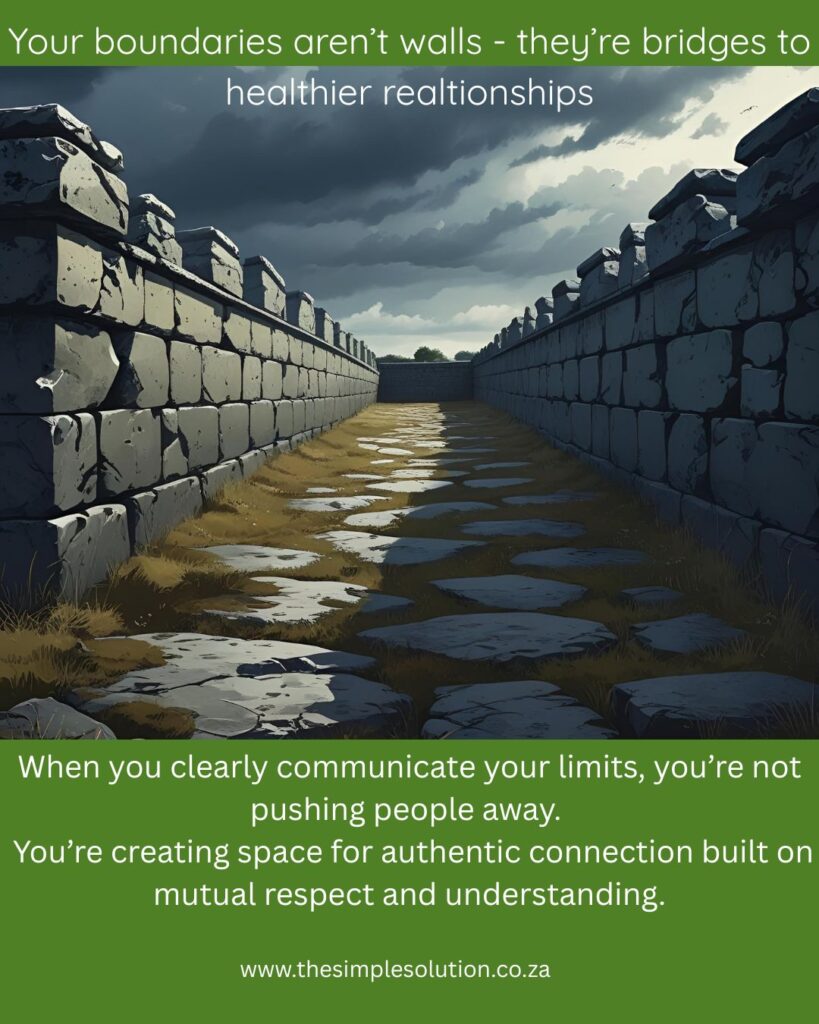
While it may seem counterintuitive, saying “no” can actually strengthen relationships. When you’re honest about your boundaries, others learn to respect your limits. In healthy relationships, setting boundaries creates mutual respect and understanding. Being able to say “no” allows you to show up more fully when you do say “yes,” which leads to more authentic connections. - Protects Against Resentment
Resentment often creeps in when you’re constantly doing things for others at the expense of your own needs. By saying “no” to unnecessary obligations, you protect yourself from this resentment, keeping your mental and emotional energy focused on what truly brings you joy and fulfillment.
Practical Tips for Setting Boundaries
- Define Your Limits
Take some time to reflect on what you’re comfortable with and where your limits are. This might include identifying the amount of time you want to dedicate to work, socializing, family, or self-care. Write these down so you can refer back to them when you’re faced with a difficult decision. - Practice Saying “No” Politely But Firmly
“No” doesn’t have to sound rude. Phrases like, “I’d love to help, but I don’t have the bandwidth right now,” or “Thank you for thinking of me, but I’ll need to pass this time,” communicate your boundaries with respect and kindness. Practice saying “no” in ways that feel comfortable to you. - Set Boundaries in Advance
If you know you’ll be in a situation where people are likely to make demands of your time, set your boundaries ahead of time. For example, if you’re attending a family gathering, tell them how long you plan to stay. This way, people are less likely to take advantage of your time, and you won’t feel pressured to stay longer than you’d like. - Don’t Feel the Need to Over-Explain
Many people feel the need to justify their “no,” but you don’t owe anyone a lengthy explanation. A simple, clear response can be powerful and often communicates your boundary more effectively. Over-explaining can make you feel guilty, which might pressure you into doing something you don’t want to do. - Be Prepared for Pushback
Some people may not respect your boundaries right away, especially if they’re used to you always saying “yes.” Remember that their reaction is not your responsibility. Stand firm in your boundaries and recognize that setting them is an act of self-care and self-respect.
When Setting Boundaries Feels Difficult
It’s natural to feel some discomfort when setting boundaries, especially if you’re not used to doing it. You may fear disappointing others or worry about how they’ll perceive you. But remember, setting boundaries isn’t about being selfish; it’s about protecting your wellbeing. It’s okay to start small and work your way up. As you build confidence in saying “no,” it will become easier, and the positive impact on your mental health will be well worth it.
The Bottom Line: Boundaries Are Key to Mental Health
Learning to say “no” and setting boundaries is a skill that takes practice, but it’s one of the most powerful things you can do for your mental health. By setting limits that protect your time, energy, and emotional wellbeing, you give yourself the gift of peace and focus. Don’t be afraid to prioritize yourself—healthy boundaries are a critical step in achieving lasting mental and emotional wellness.